Over a month since a post you say? Should stop being lazy you say? SHUT UP VOICES IN MY HEAD, I’M MY OWN MAN. Plus I’m going to write about beetles now.

7. Wasp beetle

It looks nothing like a wasp really does it? It’s obviously a beetle and no one is fooled, but I feel I should include it because I accidentally killed one once and I’m hoping this will stop the nightmares.
Clytus arietis
Photo from here
6. Badister Bullatus

It’s red and black, which is quite nice, but it’s here mainly because it’s name sounds like a Latin super villain.

Coleoptera: Badister bullatus
Photo from here

5. Rhinoceros beetle

It’s got a horn like a rhinoceros. I bet you don’t.
Horned Stag Beetle - Valsehjort (Chiron cylindricus), Juni 2009
Photo from here

4. Minotaur Beetle

Like above but twice as good.

minotaur

Photo from here

3. Glow Worm

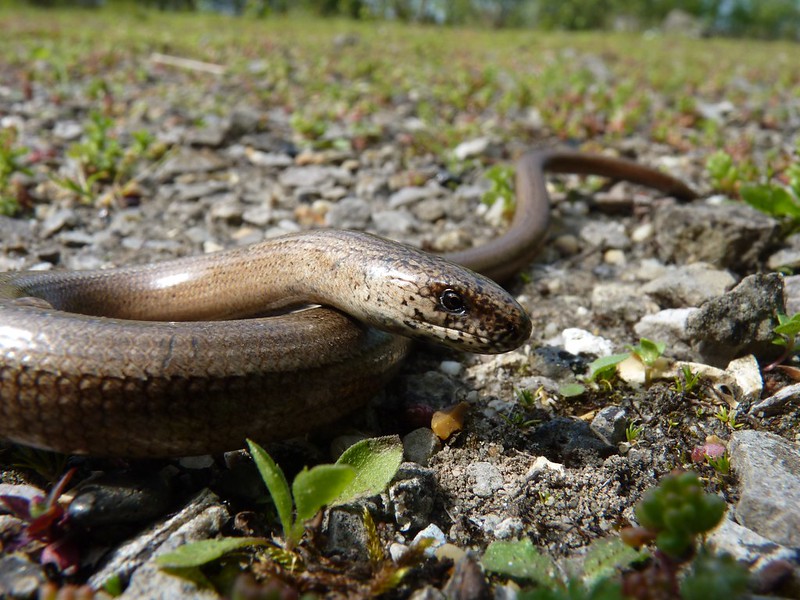
Most things that are called worms but aren’t actually worms are awesome. Look at slow worms. They are blatently the best reptile. Do I need to explain why? Of course not.

Anyway the glow worm eats snail and glows. Cats do neither of those things, hence they are not on the list. Plus they aren’t beetles obviously. It also looks like roofing slates which have been brought to life by a mischeivous wizard
Lampyris noctiluca
Photo from here

2. Green Tiger Beetle

The only thing that could improve a green tiger beetle is the addition of a small gilded cane and a fur-lined cape.
Gnasher, Green Tiger Beetle, Cicindela campestris

Photo from here

1. Lesser stag beetle

I know what you are thinking. “WOAH WOAH WOAH, WHAT’S THIS LESSER STAG BEETLE NONSENSE?!?!?! iT AIN’T GOT BIG LIKE STAG BEETLE PLUS HORNS AND THAT”. Well, you sound like an idiot. Look at that sentence. It’s largely gibberish. Don’t you have a basic grasp of grammar?

Lesser stag beetle has made it onto the list because it’s actually around. They show up year after year, putting in the effort. Normal stag beetles just swan around london, eating soft cheese with tabloid celebrities, expecting everything on a silver platter. Did you know the number one cause of death for the European stag beetle is drowning in humous? Lesser stag beetles probably die properly, in mills and steel furnaces. Lesser stag beetles actually show up at your birthday party, while European stag beetle say they’ll come but send a text last minute saying that they found a dog in their shed and need to find it’s owner.
Lesser Stag Beetle, Farthing Downs
Photo from here

Next week – Top 6 british native reptiles.

8 – The European Giant Salamander, Andrias ludificatio


The European Giant Salamander has an unusual history. Readers may be aware that giant salamander species are found in Japan; Andrias japonicas, in China; Andrias davidianus, and North America; Cryptobranchus alleganiensis. It seems odd that Europe, which spans similar latitudes and experiences broadly similar weather patterns, lacks a similar species. This, however, isn’t as much of a mystery as once thought, as a recent paper (An Andrias sp. in Early-Modern Europe; Nature) sets out the evidence that a giant salamander species did, until recently, inhabit Europe, including Britain. Which is pretty awesome.

There is no point in me setting out all the evidence for the presence of Andrias ludificatio in Europe as I would essentially be parroting the article mentioned above. Also, Europe is a little out of the scope of this series. I will, however, summarise briefly some points from the paper that I found particularly enjoyable. The report contains a vast collection of historical records that, with little doubt, refer to giant salamanders. However, the vast majority of the records are in a language other than English, so I am forced to rely on the provided translations – I wonder if any bias can slip in during translation? The records pale, really, considering that two historical specimens exist. One is of an adult and measures 1.23 m (but was probably longer in life), and was preserved with lavish coatings of varnish. This was found in storage in a small church in Poland in 1996, but is thought to be at least three hundred years old.

The other specimen is of a juvenile (measuring approx 30cm) and is preserved in formaldehyde. It has been in the collection of the Slovak Historical Collection since 1748, and had never been formally identified until ‘The present author [of the paper mentioned above] stumbled across it whilst cataloguing olms’ (Sallipa, 2013).

These specimens provided ample genetic data to prove that both these specimens were of the same species, but were distinct from other giant salamander species – though they clustered closer to both the Chinese and Japanese Giant Salamanders than the North American Hellbender, the basis for including it in the Andrias genus.

So, there is solid evidence that a giant salamander occurred in continental Europe – but what about the UK? No physical specimens exist, unfortunately, but there are some fascinating written records (spelling and some grammar has been modernised for ease of understanding).

In 1706, the vicar of Dunsop Bridge (in present day Lancashire) wrote in the church records:

Two local men of late did bring forth from the river a monstrous fish as long almost as a man, in bigness around the middle as much as the bigness of a man’s thigh. The mouth is the breadth of a man’s hand and the eyes are of insignificance. Most strange are its four hands like a child. Surely a sour omen, it was put to death’  (Sallipa, 2013)


In 1648, nobleman Charles Chodmonley was visiting Glenridding, a village on the edge of Ullswater, the second-largest lake in the Lake District. He wrote;

‘The local fisherman provided two young ewts, which I preserved in brandy. They are much larger than any other I have seen before, but I am assured that they can grow much larger. I inquired into the possibility of a full-grown ewt being procured, but was informed that they are not as much met with as they once were.’ (Sallipa, 2013)

Unfortunately these brandy-preserved ‘ewts’ appear not to have survived.


The final record comes from the tiny village of Tindale in Cumbria, 1634. Once again from the pen of the parish priest:

‘A limb-ed serpent was captured in the eel-trap of Jon Mosely. It was brought into the village. It appeared expired, but wriggled with restless vitality when placed in the trough. Nothing of its like has been seen before. It survived in the trough 8 days, until bitten by a horse.’ (Sallipa, 2013)


Certainly not overwhelming evidence, by any means. But taken hand in hand with the recent  physical discoveries from Europe, it certainly is tantalising. It is interesting to note that in the record of Charles Chodmonley it appears that mature ‘ewts’ were becoming rarer in even three centuries ago. Japanese and Chinese Salamanders are both suffering declines at present due to a myriad of factors, including over fishing/collection. Perhaps overfishing had the same effect a few centuries earlier in Europe?

I hope all our readers enjoy the rest of April.


Sallipa, R. (2013) An Andrias sp. in Early-Modern Europe, Nature

I found this video of a wild european glass lizard last week. I’m becoming increasingly obsessed with it.


It moves like Dale Winton’s disembodied arm thrashing through a bush.

It looks like a penis that has been cursed by a witch.

When it starts to swim it looks a brown condom possessed by the spirit of a sea serpent.

It’s like a poorly designed anamatronic snake rallying against its programming.

I’m not a fan of the name European glass lizard. It doesn’t quite convey how different it looks like to other legless lizards. I’m going to champion a new name, possibly “The Blight”. I reckon that’ll envoke it’s sad eyes and anger at a cruel creator.

The Blight

6 - The Clifden Nonpareil

Clifden Nonpareil, credit to Harald Süpfle, via Wikipedia

The Clifden Nonpareil (also known, rather obviously, as the ‘Blue Underwing’), Catocala fraxini, has been ‘known in Britain since at least 1740’ (Heath, 1983). The earliest account I can find of this moth is from 1749, in Benjamin Wilkes’ wonderful, succinctly titled book  - The English Moths and Butterflies : together with the plants, flowers and fruits whereon they feed, and are usually found ; all drawn and coloured in such a manner, as to represent their several beautiful appearances ; being copied exactly from the subjects themselves, and painted on the best atlas paper ; together with an attempt towards a natural history of the said moths and butterflies.

I was planning on quoting the bit about the Clifden Nonpareil below, but I think a picture actually does the text better justice:


Wilkes' original description of the Clifden Nonpareil

Wilkes’ original description of the Clifden Nonpareil


As can be read above, the moth was first found in Clifden (or ‘Cleifden’, as Wilkes spells it) in Buckinghamshire; in modern times now spelt ‘Cliveden’. The ‘Nonpareil’ part of the name comes from the French for ‘without equal’. Essentially, in modern-speak, the moth is ‘Cliveden’s moth without equal’. Good name. (Interestingly, ‘nonpareil’ shares the same French root word as ‘umpire’)


This early record, however, probably does not relate to a resident individual. Indeed, the Clifden Nonpareil was probably only ‘temporarily resident [in Britain] in aspen woodland probably from about 1935 to 1964.’ (Heath, 1983). This expansion in range was probably due to favourable climatic conditions in the first half of the 20th century. In the 50’s and 60’s the climate again deteriorated, and ‘Several moths that had colonised southern England during the preceding period of favourable weather, now became extinct’ (Hawksworth, 2001).

It’s not all bad news though! There are possible indications that there may be a few, small fledgling colonies in Suffolk. Perhaps we are now in the grip of a recolonisation by this absolutely stunning beast.


EDIT: As always, I shun rewriting articles. After writing the text above, I contacted the moth recorder for Sussex regarding the current status of the moth in the county. Colin Pratt, the aforementioned recorder, provided me with a wealth of information and I am now forever in his debt.  The following quote from his book summarises the current status of the Clifden Nonpareil in Sussex:

A scarce immigrant now well established in both vice-counties since 2001 or 2005, the species continues to be repeatedly reported in the far east and freshly in the south-western corner of Sussex’ (Pratt, 2013)

So this post has actually ended up being about the recolonisation of a former resident – perhaps the Clifden Nonpareil would be better termed a ‘transitory resident’?

The larval foodplant is aspen, Populus tremulosa, and the adult moth is/was on the wing from August to September. And, speaking of wings, the wingspan of this rascal is in the range of 75 – 95mm. I’d love to see one someday in future.  I can’t shake the idea that if you licked it, it would taste of Parma Violets. Hopefully I will have the strength of will to resist the urge to find out.


Hawksworth, D. L. (2001) The Changing Wildlife of Great Britain and Ireland, Taylor & Francis Ltd., London.

Heath, J. (1983) The Moths and Butterflies of Great Britain and Ireland: Noctuidae (Cuculliinae to Hypeninae) and Agaristidae, Harley Books, Essex.

Pratt, Colin (2013) Supplement Number Two to A Complete History of the Butterflies and Moths of Sussex, self-published.

In my leisure time, I enjoy reading Victorian natural history reports; I assume everyone does. During my reading yesterday I came across a wonderful account that I thought would be worth sharing on the blog.

The following quote comes from the Proceedings of the Royal Physical Society of Edinburgh, 22nd December 1858:

The stomach of a large pike was exhibited, which contained a water hen, Gallinula chloropus, and a water ouzel, Cinclus aquaticus, both apparently swallowed very shortly before the fish was captured. The pike weighed 30 lbs., and measured 4 feet 4 inches in length. It was taken on the estate of the Duke of Atholl, in Perthshire, and is now preserved in the valuable Anatomical Museum of the University.’

If I had gone for a walk in East Yorkshire and had only seen a dipper and a moorhen during that time, I’d count that as a decent bit of birding (Dipper being very thin on the ground there).  So that pike ate essentially the equivalent of a decent bit of East Yorkshire birding. Well done.

Killers from the egg: the malevolent aged grin.

They dance on the surface among the flies.


Or move, stunned by their own grandeur,

Over a bed of emerald, silhouette

Of submarine delicacy and horror.

A hundred feet long in their world.

I also found this video which our readers may like. Or hate. We seem to be very keen on the ‘ducklings being eaten’ side of things at the moment. 

In ponds, under the heat-struck lily pads-

Gloom of their stillness:

Logged on last year’s black leaves, watching upwards.

Or hung in an amber cavern of weeds


The jaws’ hooked clamp and fangs

Not to be changed at this date:

A life subdued to its instrument;

The gills kneading quietly, and the pectorals.


And here’s a video for all you Ted Hughes fans out there:

With a sag belly and the grin it was born with.

And indeed they spare nobody.

Two, six pounds each, over two feet long

High and dry and dead in the willow-herb-


One jammed past its gills down the other’s gullet:

The outside eye stared: as a vice locks-

The same iron in this eye

Though its film shrank in death.


-          Extracts of poetry are from Ted Hughes’ ‘Pike’. Blame him for the pretension in today’s post.

5 -The Norfolk Damselfly, Coenagrion armatum

Male Norfolk Damselfly, by Sulka, from Flickr

Male Norfolk Damselfly, by Sulka, from Flickr

The Norfolk Damselfly was discovered in 1902 or 1903 (accounts vary) in, surprise surprise, Norfolk, by Professor William Alexander Francis Balfour-Browne. It was first recorded from Stalham, and was subsequently discovered at Sutton and Hickling Broads. Most accounts give the year of discovery as 1902; but unfortunately I can’t find any early accounts of the discovery to confirm or deny this.

Coenagrion armatum was approx 32mm long and its flight season spanned from late May to mid July. Visually, it resembled a Blue-Tailed Damselfly. Males could be distinguished by their ‘strikingly long, curved inferior appendages’ (Brooks, 2004) as well as the top of their thorax being ‘almost entirely black’ (Brooks, 2004). Female Norfolk Damselflies can be distinguished from the Blue-Tailed Damselfly by their ‘broad emerald-green antehumeral stripes and prominent greenish-blue patches at the base of the abdomen’ (Brooks, 2004).

There does not appear to be much information available about the decline and extinction of the Norfolk Damselfly, and some of what does exist appears contradictory. Hawksworth states that ‘The population went into decline in the 1950s as the breeding sites began to dry up and became over-grown with reed, sallow and alder carr; this species was last seen in 1957’ (Hawksworth, 2001). Conversely, Tait & Tayler claim that ‘the Norfolk Damselfly was unable to survive the pollution of sites where it had previously thrived’ (Tait & Tayler, 2005). A slightly different view comes from Maclean, who quotes dragonfly expert Cynthia Longfield as saying the Norfolk Damselfly was ‘exceedingly rare’ in 1937 – which seems counter to Hawksworth’s view that declines started in the 1950’s. Maclean also adds the interesting point that the restricted range of the damselfly might indicate that it was in fact a ‘relatively recent migrant from the near continent’ (Maclean, 2010).

I personally wonder whether Tait & Tayler have possibly confused the fate of the Norfolk Damselfly with that of the Orange Spotted Emerald, which certainly seems to have met its end at the hands of pollution (perhaps the subject of a post another day?).

The idea that the Norfolk Damselfly was a recent colonist is an interesting one; it would certainly be a good reason for its restricted range in the UK. As the European range of the ‘Norfolk Damselfly’ is from the Baltic eastwards, recolonisation does seem unlikely. However, a population was rediscovered in the Netherlands in 1999, and only approximately 120 miles of North Sea separate the Netherlands from East Anglia. So if the population in the Netherlands was to increase, and given some suitable vagrant weather, and if some suitable habitat was to exist somewhere in the south-east of England, then possibly maybe perhaps the Norfolk Damselfly could recolonise. Lot of ifs.

Brooks, S. (2004) Field Guide to the Dragonflies and Damselflies of Great Britain and Ireland, British Wildlife Publishing, Hampshire.

Hawksworth, D. L. (2001) The Changing Wildlife of Great Britain and Ireland, Taylor & Francis Ltd., London.

Maclean, N. (2010) Silent Summer: The State of Wildlife in Britain and Ireland, Cambridge University Press, Cambridge.

Tait, M & Tayler, O. (2005) The Countryside Companion, Think Publishing, London.

Another month has passed so we all know what that means. CHAAAAAAAARTSSSSSSSSS.

February bar chart February pie chartsThe more eagle-eyed of data enthusiasts will notice that Richard Comont’s score has gone down. This isn’t due to nefarious deeds or some benevolent lord penalising his efforts, it’s my absurd in ability to notice simple things. I misread his spreadsheet. Let’s all agree to forget it ever happened.
People seem to building up numbers impressively but not quite at the same rate as last month. My imagining this is largely due to poor weather, and most of the species present will be largely the same as last month. The few warm days that one would hope for February seemed few and far between. A few people have had the first amphibians of the year pop up, and a smattering of spring insect life has been seen.
Whereas last month birds seemed to the make the majority of species seen, this months biggest increases seemed to be plant life.  Africa has been particularly rampant botanically, nearly tripling an already impressive amount of greenery.
Species of particular note from the last month included-

The first odonata (in the form of common blue and azure nymphs) from my goodself

Dipper from Mr. Harding-Morris

Red Kite from Stacey

Alexandrine Parrot from Jess

Next month should see a big increase of inverts, hopefully some bees and the vast drippings of spring migration to arrive back.

Current tallies can be seen here


A snappy title I know.

So I was going to go along a similar theme to James’ recent heron post but then I reached a dilemma. His post had herons eating things slightly out of the ordinary. Greater Black Backed Gulls (hereby referred as GBBGs) eat awesome things all of the time. They seem to particularly like puffins. Like in here and here.  In fact, these videos show how adept they are at plucking charismatic auks from the sky.

Obviously restricting yourself to puffins when plenty of other adorable auks are going about with intact souls seems rather foolish.

It almost certainly didn’t want this to happen

This guillemot probably wanted to open a school for orphans.

Ducks are fair game, and often eaten in the sea, as if mocking a duck for daring to take on the sea.

Go on. Taste the salt water.

I’m fairly sure most birds are fair game. I’m not expert but this probably a cassowary chick (ok, its a bar tailed godwit, but nonetheless impressive. This mallard probably had a family just out of shot. It’s ok, as the GBBG helped the orphaned youngsters learn to fly. HAHHAHHAHA no it didn’t, it ate them.

I think this is a water rail, but it doesn’t really matter, as it’s essence was drained through it’s eyes as it drew it’s final breath. Shearwaters are treat similarly.

Probably best of all is this GBBG preying on an adult grey heron. A simpleton might thinking it’s trying to nab the fish, but that would be a basic for my taste.

This was probably done for a laugh. Impressive team work though. High fives all round.

It might seem impressive that a heron can eat a rabbit. Well it’s more impressive when a GBBG does it, because it’s probably just showing off or scaring a nun. Or explaining tidal patterns.

Of course, what would be the best way for a GBBG to harvest the most souls? Eating lots of small things? Obviously not, as the amount of soul is based on the size of the animal and krill have no moral compass. No, obviously the best way to get a lot of hearty nourishing souls quickly would be to just eat another GBBG.  Unfortunately it’s not quite as easy as it sounds. It’s basically watching gods fight while us mere mortals look on in pathetic terror.

Other gulls are fair game though. Especially when backed by the warm glow of the setting sun.

I like the wilted sigh of the cameraman towards the end. It perfectly captures the sense of bleakness GBBGs leave us with.

They can’t be all bad though. Some seem to enjoy some light puppetry.

Dance for me, my pretty

They can also dabble in other arts. It seems to be telling me something about the futility of being.

Edit -

Africa Gomez reminds me of this beauty. Optometrist to the sea

The Grey Heron, Ardea cinerea, is pretty awesome. Sort of midway between a bird, a spear, and brace of broken waking sticks. Their method of catching prey is great as well:

1: Stand around and wait for something to come near you.

2: If something comes near you, stab it with your face.

3: If suitably subdued, swallow.

4: If not suitably subdued, beat it against something/drown it in nearest water.

5: Swallow.

I imagine that, like me, most people imagine herons hanging about near water, catching fish and frogs and aquatic invertebrates. Maybe occasionally eating Great Crested Newts because Grey Herons pay no heed to conservation.

(I implore you to click on all the linked photos in today’s post. It is well worth it)

Of course, Grass Snakes tend to hang around near water as well, and so you’d assume they’d occasionally get snapped up. And they do.

What else hangs around near water and could fit down a heron’s neck? Ducklings? Yup. Please click the link and look at the picture and read the article. It is from that bastion of reliable and even-handed reporting, ‘The Sun’. I think my favourite quotes from the article are ‘its mother wailed in agony‘ (I’ve never seen a duck wail), and ‘Nature can be so cruel‘ (but most of the time it is a parade of relentless loveliness, of course). Well done ‘The Sun’, rock bottom is no obstacle to you. 

If photographs of ducklings being eaten don’t quite do it for you, here’s a full video:

So if herons sit about on the edge of water looking for fluffy adorable little birds to eat, do they ever occasionally snatch up that most adorable of grebes, the Dabchick? Well of course. And they fight over their bloodied corpses. 

And they’ll happily chow down on a Moorhen.

What else can be found near water? Rats? Yeah. They’ll happily eat rats. Delightfully, there is also an article from ‘The Sun’ about a heron eating a rat. The picture is oddly cropped and stretched, but that rat doesn’t look quite right to me. I’ve never seen a wild rat with that sort of pale patterning on the underside. The article also gives us a bit of information about Grey Herons, saying that ‘They usually go for mice‘ (of course, herons are notorious mice eaters) and that ‘Herons are popular in the UK‘ (?).

And if you want to see a whole rat-eating event in glorious technicolour then watch the video below:

I did find two pictures of Grey Herons eating small rodents. One picture, taken in the Netherlands, confidently identifies the meal as a Common Vole. The other picture seems to be of a vole as well, but I wouldn’t be confident about identifying the species.

I imagine that everybody in the entire world has seen the pictures of a Grey Heron catching, drowning and eating a rabbit. I won’t bore you with loads of details, in fact I will just direct you to Darren Naish’s post on the subject. I will also add another picture you probably won’t have seen of a heron with a rabbit. Clearly not incredibly unusual behaviour.

Now we get onto the weirder stuff. These are pictures that I didn’t expect to exist and feature prey species that I wouldn’t have expected at all. For example, a heron catching, drowning and eating a starling. I’d have imagined Starlings might have been a bit too wary, or nimble, for a heron to catch. Clearly not. 

Though they are sometimes nimble enough to escape:


This next species certainly isn’t nimble and would easily fit down a heron’s gullet; I just wouldn’t have assumed their path’s would cross. Heron eating a mole. Moles do occasionally come to the surface and wander about; I don’t know why. Is it a dispersal thing?

I suppose if you can eat a rabbit and you can eat a snake, a Weasel should present no obstacle. And it doesn’t appear to. Here is an entire sequence of pictures of a Grey Heron attempting to subdue a weasel. If I was a weasel being attacked by a heron, I’d play dead, let it start to swallow me, then I’d start clawing at the inside of its oesophagus. If I was a weasel I’d be king.

This last one surprised me the most – Grey Heron eating an Adder. How fascinating is that? Another pair of species that I wouldn’t have thought would overlapped that much – though Adders are our most widely distributed snake, and I have seen them in marshy habitat at Thorne Moor in Lincolnshire, so there is no good reason why herons shouldn’t catch and eat them. I wonder if herons can distinguish between Grass Snakes and Adders, and thus subdue and eat them in different ways?

In fact, I think it is quite interesting that Grey Herons often seem to use drowning when dealing with mammals and birds, a tactic they obviously don’t use when catching amphibians and fish. It seems to indicate that capturing a mammal isn’t just a one-off, opportunistic event, as clearly they have a strategy in place to deal with it.

Anyway, there you go. A post filled with small animals being horribly dispatched by a dispassionate broken-umbrella of a bird.

And if you know of any other weird animals being eaten by Grey Herons, please let me know. I had my fingers crossed that there would be a picture of a Grey Heron eating a kitten. I bet it’s happened though.

Follow

Get every new post delivered to your Inbox.